
Earth Day: Why it's important & how you can help!
- lnisbell3

- Apr 22, 2021
- 5 min read
Updated: Apr 23, 2021
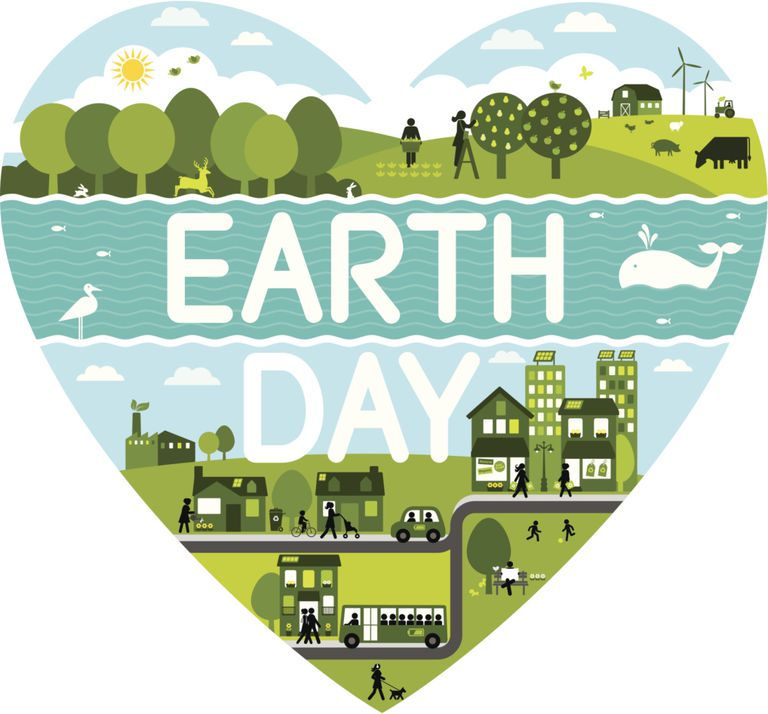
Who: Everyone
What: A day of celebration and awareness of our planet! When: April 22nd Where: Planet Earth
Why: There are many issues that are effecting our Earth that need to be fixed
Have you ever woken up and thought about how thankful you are for the Earth? Yeah, probably not. But the truth is, our Earth is at a serious risk and if humans keep damaging the Earth, we won't have anything left. Our Earth provides clean water, fresh oxygen, food, and everything we need to live, so I hope you can see that it's important. Below are 5 issues our Earth is going through, however there are also 5 things that you can do to help save the Earth. Included are a quick introduction on the topic and what it is, some not so fun facts about it, a simple project or thing you can do to help it, and a short and informational quiz! You might think that doing one thing won't change anything, but imagine if every person thought, "Well it's only one bottle" as they littered. Then, imagine if every person picked up a piece of litter, or if every person did one of these projects below. There are billions of humans living in this world, so clearly together, we can make a change. The only thing left to decide is do we want to make a change for a better world or not.
Climate Change:
Climate change is when the weather, land, and climate changes in an unorthodox way. Currently, our climate is rapidly changing, mainly due to humans. One effect of climate change is that there will be more tornadoes and hurricanes in some places, and extreme drought in others. Also, because of rising sea levels, islands, states, and cities near the water will become flooded and destroyed forever. Although scientists are still researching all the causes of climate change, one of the main reasons is because of the burning of fossil fuels. Fossil fuels cause greenhouse gasses, which is when the heat gets trapped inside the atmosphere and causes increase in temperatures. This is also known as global warming, and it needs to be changed. Below are some not quite "fun" facts about global warming that prove just how much we need to help.
Climate change could be irreversible by 2030
Greenhouse gasses are at an all-time high
Over 1,000,000 species face extinction
In 30 years, 200,000,000 people could become refugees due to climate change
1/2 of the world's coral reefs have died in the past 30 years & animals are dying largely because of increasing sea temperatures and climate change
IF we don't change our practices by 2030, we will need a second planet
Obviously, we need to change things so that we can save our planet! There are many, many ways to help climate change and the environment, but here we will explain a quick and simple way to not only save money, but to save the Earth.
Steps:
Unplug plugs from the outlet when you're not using them! Yes, that's it!!
While you may not be able to unplug all these devices, it's simple enough to unplug your phone charger after you unplug it in the morning, to unplug the toaster once you've finished with it, or to unplug your electric toothbrush once you've brushed your teeth
You can even try setting an alarm to remind yourself to unplug a device!
"About a quarter of all residential energy consumption is used on devices in idle power mode, according to a study of Northern California by the Natural Resources Defense Council. That means that devices that are “off” or in standby or sleep mode can use up to the equivalent of 50 large power plants’ worth of electricity and cost more than $19 billion in electricity bills every year. And there’s an environmental cost: Overall electricity production represents about 37 percent of all carbon dioxide emissions in the United States, one of the main contributors to climate change." -New York Times
IF you have any questions on climate change, what you can do to help, or devices and appliances that use energy while still plugged in, please write to @madelinemoops in the comments section below or email us at askbleem@gmail.com!
Wastage:
Wastage is one of the most common problems that is effecting our Earth today. Whether wasting natural resources, water, materials, or food, wasting is a problem that needs to be fixed, Here we're going to be focusing on wasting food, but keep in mind that many other things are wasted too. Americans alone waste...
40% of all food produced
$161,000,000,000 worth of food each year
130,000,000,000 pounds of food each year
1,249 calories per person per day
20% of landfill weight is food
So as you can see, this is a huge problem. Imagine if all that money could be used for something else, like helping the environment or helping feed those who cannot afford food themselves? The good news is that you can help change this. While there are multiple ways to help, the project below involves using food scraps to make into compost: a nutrient-rich, money-saving, natural soil. Compost uses rotten or inedible food scraps (such as banana peels or coffee grounds) and outdoor materials (such as leaves and grass clippings) to recycle into soil!
Supplies:
Plastic bottle
Scissors
Tape
Spoon
Water
Newspaper or something to cover the surface (for easy cleanup)
Potting soil or dirt
Compost scraps: 50% Wets/Greens (fruit & vegetables scraps) & 50% Drys/Browns (Paper & outdoor materials)
Steps:
Start collecting your compost scraps in a container a day before you put together your mini compost bin- you'll be surprised at the amount of scraps you collect!
Cut the top few inches of your plastic bottle off (the funnel shaped part)
Follow the model below on putting in the scraps you collected (if needed, you can use scissors to cut the scraps smaller)

4. If your soil seems dry, spray or drizzle a bit of water on it being sure not to add too much
5. Using tape, secure the top "funnel" of your bottle back on the top
6. Place your bottle somewhere outside (such as a porch) and check on it every few days to see if it needs water
7. And now it's time to....wait. Yes, compost can take a few weeks to a few months, but then you'll have great soil for plants!
This is a very miniature version of composting, but if you are interested in composting full time, check out "compost bins" on the internet. It's not only a great way to recycle food, but it gives you cheap, nutrient-rich soil for your garden and plants! IF you have any questions on compost, what you can and can't put into it, or are interested in starting one yourself, please write to @lnisbell3 in the comments section below or email us at askbleem@gmail.com!
Deforestation:
This topic is currently not available. Check back here for updates.
With any questions or comments, please feel free to write to @brandon in the comments section below or email us at askbleem@gmail.com!
Pollution:
This topic is currently not available. Check back here for updates.
With any questions or comments, please feel free to write to @Emily in the comments section below or email us at askbleem@gmail.com!
Littering:
This topic is currently not available. Check back here for updates.
With any questions or comments, please feel free to write to @ielijah780 in the comments section below or email us at askbleem@gmail.com!
Thank you for taking the time to read this post! We hope that you have learned something and are on the way to helping save the Earth! If you have any questions, comments, or would like to share a project you did, please let us know in the comments below! Lastly, to find additional information about Earth Day or things you can do to help, visit earthday.org!
-Brandon, Lauren, Elijah, Emily, & Madeline, BLEEM Co-Founders


Comments